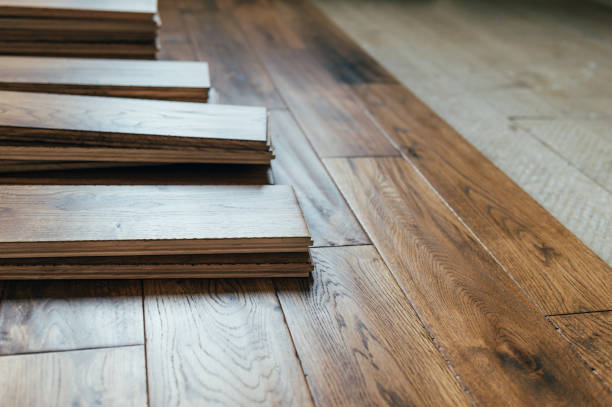

A hardwood floor, properly installed and maintained, can last a hundred years. That is not a marketing claim — it is a documented reality in historic homes across the country, where original floors have been refinished multiple times over the decades and still look beautiful. No other residential flooring category comes close to that lifespan, which changes the economics of the investment significantly when you account for it.
Achieving that longevity, though, depends on professional hardwood floor installation done correctly from the start. A hardwood floor that was installed over an improperly prepared subfloor, in conditions that caused moisture-related problems, or with fasteners and adhesives that were wrong for the application will not last a hundred years. It may not last ten. Getting the installation right is how you get the longevity that hardwood is capable of delivering.
Engineered Hardwood vs. Solid Hardwood: Knowing the Difference
The hardwood flooring category now includes both solid and engineered options, and the distinction matters significantly for certain applications. Solid hardwood is exactly what it sounds like: a plank milled from a single piece of wood. It can be sanded and refinished multiple times over its life, which is why century-old floors are still in service. Its limitation is moisture sensitivity — solid hardwood should not be installed below grade or in environments with significant humidity swings.
Engineered hardwood has a real wood surface layer over a plywood or composite core. The layered construction makes it more dimensionally stable than solid hardwood, which means it handles moisture and temperature variation better. It can typically be refinished one or two times, not as many as solid, but it opens up installation locations that solid hardwood is not suited for — including basement spaces and rooms with radiant heat floors.
The right choice between solid and engineered depends on the specific room, the local climate, the subfloor type, and the homeowner’s long-term intentions for the space. A knowledgeable flooring contractor helps clients make that decision with full information rather than defaulting to whichever product has better margins.
Patterns and Layouts That Add Design Dimension
Most hardwood floors are installed in a standard parallel-plank layout, running perpendicular to the main entry or the longest wall of the room. That is a well-established choice for good reason — it works in almost any room, directs the eye in a natural way, and is efficient to install.
But hardwood allows for pattern variations that add design interest when a homeowner wants something more distinctive. Herringbone and chevron patterns have become popular in recent years, particularly in entryways and formal rooms where the visual impact justifies the added installation complexity. Diagonal layouts make smaller rooms feel larger. Mixed-width plank installations using two or three different plank widths create a more casual, organic feel.
Refinishing vs. Replacement: Understanding Your Options
Homeowners with existing hardwood floors often face the question of whether to refinish or replace. The answer depends on the condition and thickness of the existing floor. If the boards are solid, have not been refinished too many times, and do not have extensive damage or warping, refinishing is almost always the better choice — more cost-effective, less disruptive, and with results that can be dramatic. Cruz Home Construction evaluates existing hardwood floors and gives honest guidance on whether refinishing will achieve the result the homeowner wants before recommending new hardwood floor installation. That kind of honest assessment is part of what makes the relationship with a trustworthy flooring contractor genuinely valuable.