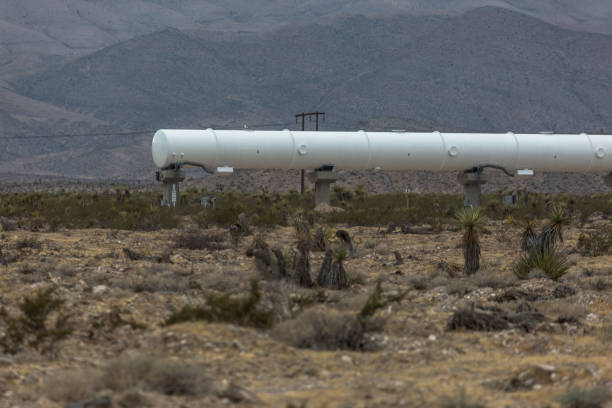

Mobility has always shaped human civilization. The way we move defines how we live, trade, communicate, and grow. From the early days when “horsepower” literally meant the power of a horse, to today’s ambitious projects like the Hyperloop, transportation has gone through a dramatic transformation. It’s actually kind of crazy to think about how far we’ve come in just a few centuries. What once took weeks now takes hours. What once seemed impossible now feels normal.
Let’s take a journey through time and see how mobility evolved from muscle to machines, and now to magnetic speed.
The Era of Animal Power
Before engines, before fuel, before electricity — there were animals. Horses, camels, oxen, and donkeys were the backbone of transportation. In ancient civilizations like Roman Empire, roads were built to allow faster movement of armies and goods using horse-drawn chariots and carts.
Horsepower wasn’t just a term. It was literal survival. Trade routes like the Silk Road connected continents using caravans. Travel was slow, uncomfortable, and often dangerous. But for thousands of years, this system worked.
Still, animal-based travel had limits. Distance, fatigue, and terrain were constant challenges. Humans needed something stronger, faster, and more reliable.
The Steam Revolution
Everything changed during the Industrial Revolution. The invention of the steam engine in the 18th century marked a turning point. Suddenly, machines could generate power without animals.
One of the biggest breakthroughs was the railway. In 1825, the Stockton and Darlington Railway opened as the world’s first public railway to use steam locomotives. It wasn’t just a train line; it was the beginning of mass transportation.
Railways connected cities, boosted industries, and made long-distance travel accessible. Goods that once took weeks to transport could now move in days. The world started shrinking — not physically, but in terms of accessibility.
Steamships also revolutionized sea travel. Oceans no longer depended solely on wind. Global trade expanded rapidly.
The Rise of the Automobile
If steam changed industries, the automobile changed daily life.
In the late 19th century, inventors began experimenting with gasoline-powered vehicles. One major milestone was the work of Karl Benz, who developed one of the first practical automobiles in 1885.
But cars truly became mainstream when Henry Ford introduced mass production using assembly lines. The Ford Model T made cars affordable for middle-class families.
Suddenly, mobility became personal. People weren’t dependent on train schedules anymore. Roads expanded. Suburbs developed. Cities spread outward. The car reshaped society — economically, culturally, and physically.
However, cars also brought problems: pollution, traffic congestion, and oil dependency. These challenges would later push innovation in new directions.
Aviation: Conquering the Sky
While cars ruled the roads, humans looked upward. In 1903, the Wright brothers achieved the first powered flight. It lasted only seconds, but it changed history forever.
By the mid-20th century, commercial aviation was booming. Airlines connected continents. What once took months by ship could now be done in hours.
Air travel became a symbol of globalization. Business expanded internationally. Tourism exploded. Cultures mixed more rapidly than ever before.
Yet aviation also faced criticism — mainly due to high fuel consumption and environmental impact. The need for sustainable mobility started becoming urgent.
The Age of Electric and Smart Mobility
Fast forward to the 21st century. Climate change concerns and technological advancements are reshaping transportation once again.
Electric vehicles (EVs) are now replacing traditional fuel-powered cars. Companies like Tesla, Inc. have made EVs popular and desirable, not just practical.
Public transport systems are also evolving. Metro systems, high-speed bullet trains, and ride-sharing apps are transforming urban mobility. In countries like Japan, high-speed trains reach incredible speeds while maintaining efficiency and safety.
Autonomous vehicles are another exciting development. Self-driving cars promise reduced accidents and improved traffic flow. Though still developing, they represent the next shift in personal mobility.
Enter the Hyperloop
And now, we arrive at the future — the Hyperloop.
Proposed by Elon Musk in 2013, the Hyperloop concept involves pods traveling through low-pressure tubes at extremely high speeds, potentially over 1,000 km/h.
The idea is simple in theory: reduce air resistance and friction, and you can travel faster with less energy. Companies like Virgin Hyperloop have already conducted successful test runs.
If fully developed, Hyperloop systems could connect cities within minutes. Imagine traveling between major cities in the time it currently takes to commute across town. It could redefine commuting, business travel, and even real estate markets.
However, challenges remain — infrastructure costs, safety regulations, and technical limitations. Like every transportation revolution before it, Hyperloop must prove its practicality.
Beyond Hyperloop: What’s Next?
Mobility doesn’t stop at Hyperloop. Researchers are exploring flying taxis, magnetic levitation trains, and even space tourism. Companies like SpaceX are already experimenting with reusable rockets, which could someday support interplanetary travel.
It sounds like science fiction, but so did airplanes once.
The Bigger Picture
When we look back, the evolution of mobility isn’t just about machines. It’s about human ambition. Every breakthrough solved a limitation of the previous era.
Horsepower gave us movement. Steam gave us industry. Cars gave us independence. Planes gave us global connection. Electric vehicles are giving us sustainability. And Hyperloop may give us speed beyond imagination.
Each phase reflects society’s needs and values at that time.
And honestly, if someone from the Roman Empire saw today’s transportation systems, they would probably think it’s magic.
Mobility will continue to evolve. The question isn’t whether change will happen — it’s how fast it will happen.
From horses running across dusty roads to pods racing through vacuum tubes, the journey of transportation tells a powerful story of innovation, adaptation, and human progress. And this story is far from over.